

Populating Protestantism
I had originally planned to study two urban protestant movements, Amiens and Rouen, in comparative perspective, but soon abandoned this approach and decided to focus on Amiens alone.
From the beginning, my research relied heavily on lists. Who were the Protestants and what attributes distinguished them potentially from their neighbors?
I was able to start making lists, even before I left for France in 1973, from published books and inventories to the Archives in the Yale University Library : lists of persons charged with heresy in the 1540s, lists of refugees from Amiens to Geneva in the 1550s, lists of individuals who were fined for refusing to decorate the fronts of their houses for the Catholic processions in 1562:
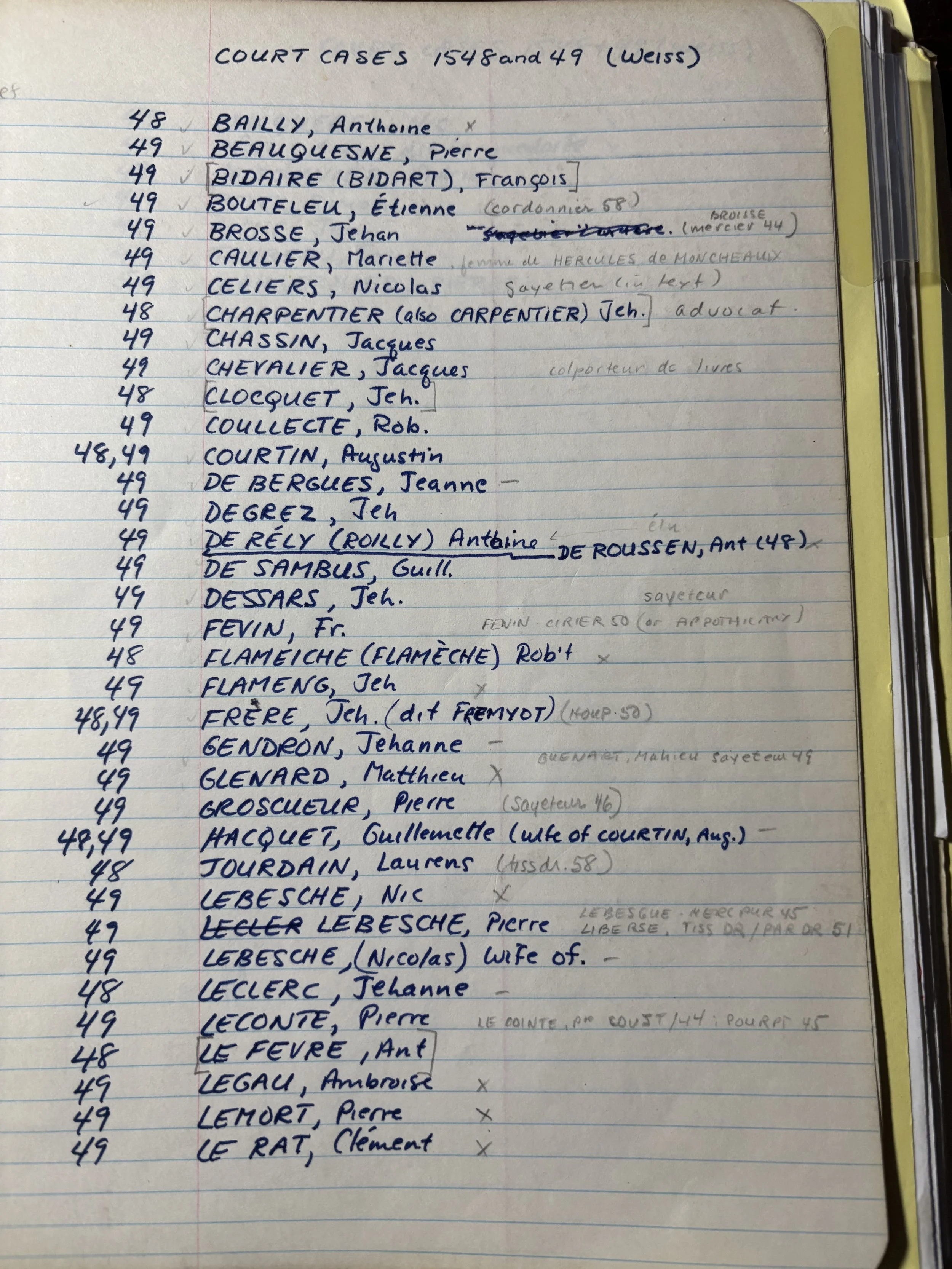
When I arrived in Amiens, the names and number of apparent Protestant adherents expanded greatly.
The original baptismal register of the Reformed Church of Amiens 1564-1565 yielded more than 400 names including parents and godparents, as well as the names of the 170 newly batpized children :
Cross-checking these against the series of inventories after death, I constructed my sample of Protestants and a sample of presumed Catholics for comparison regarding their respective occupation and social status.
Visits to the Paris repositories later in my research trip yielded a supplement to the list of accused Protestants of the 1540s.
Most astonishingly, a trip to the Bibliothèque nationale in Paris uncovered a document containing 1,700 suspects, divided into lists by parish of residence, many with occupations identified in the text! These too I alphabetized to enable easier identification as I serendipitously encountered their names in various sources.

The comparison and combination of my lists eventually required the thick loose-leaf binder shown above. It also enabled the piecemeal construction of dossiers of many of the protestants accumulated in yet more alphabetically organized binders.
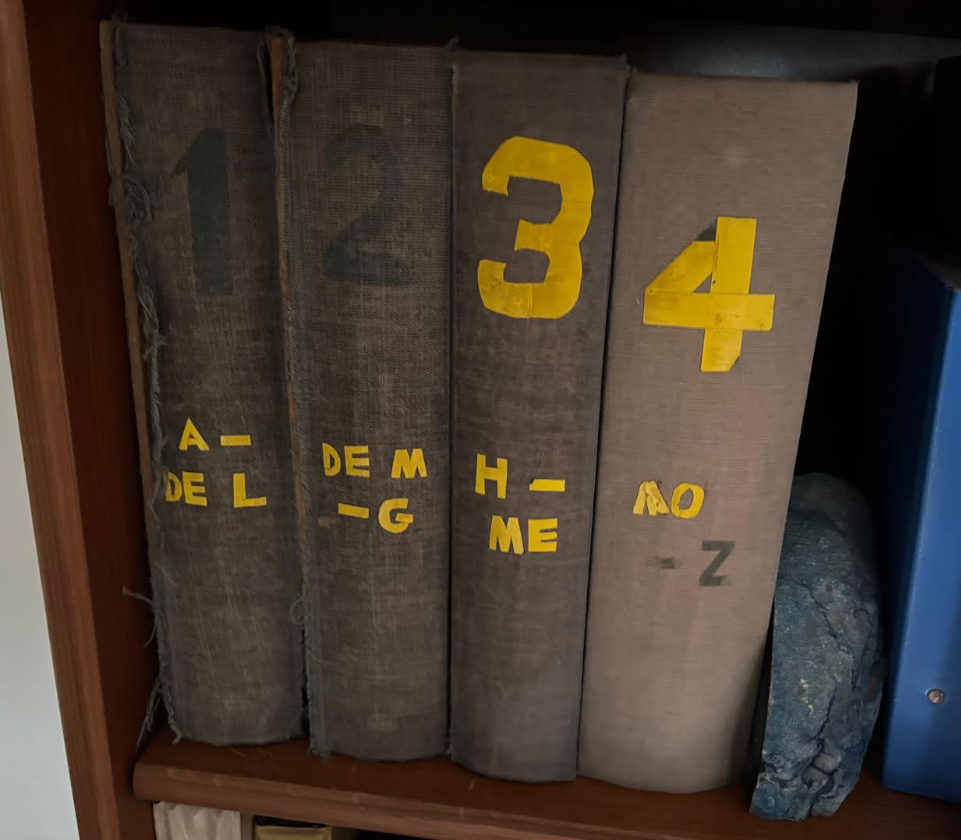
It was the pre-computer age. The organization and storage of information were different.
Lists of refugees, or indexes of names in refugee churches as well as alphabetical lists I compiled of early 17th century Protestants from Amiens and various refugee cities in England and the Netherlands, enabled me to understand how and why some of the mid-16th century protestant families managed to keep the faith.